

Natural Essence6 min read
Choosing wash-day products is easier when each item has a clear job. A catalogue can contain shampoos, conditioners, masks, leave-ins, oils and styling creams, with similar names and overlapping descriptions. You do not need to buy every category to make a useful choice.
Start with what is already happening in your routine. Which product are you replacing? What information do you need to compare alternatives? Are you looking for a rinse-out product, something intended to stay in the hair, or a styling product? Those questions create a practical shopping list without promising one routine will suit everyone.
Make a list before exploring the range
Write down the products you currently use and the purpose of each. Identify what is finished, what you intend to keep and what you want to understand better. This helps avoid buying several items for the same task simply because the packaging looks coordinated.
Separate a preference from a problem requiring professional advice. Wanting a different texture or a more convenient bottle is a shopping preference. Persistent scalp discomfort or unexpected hair loss should not be diagnosed from a product title or solved by an online shopping guide.
If you are shopping for someone else, ask about the products they already use and any known sensitivities. A gift can be thoughtful without assuming that a particular formula is right for a person whose routine you do not know.

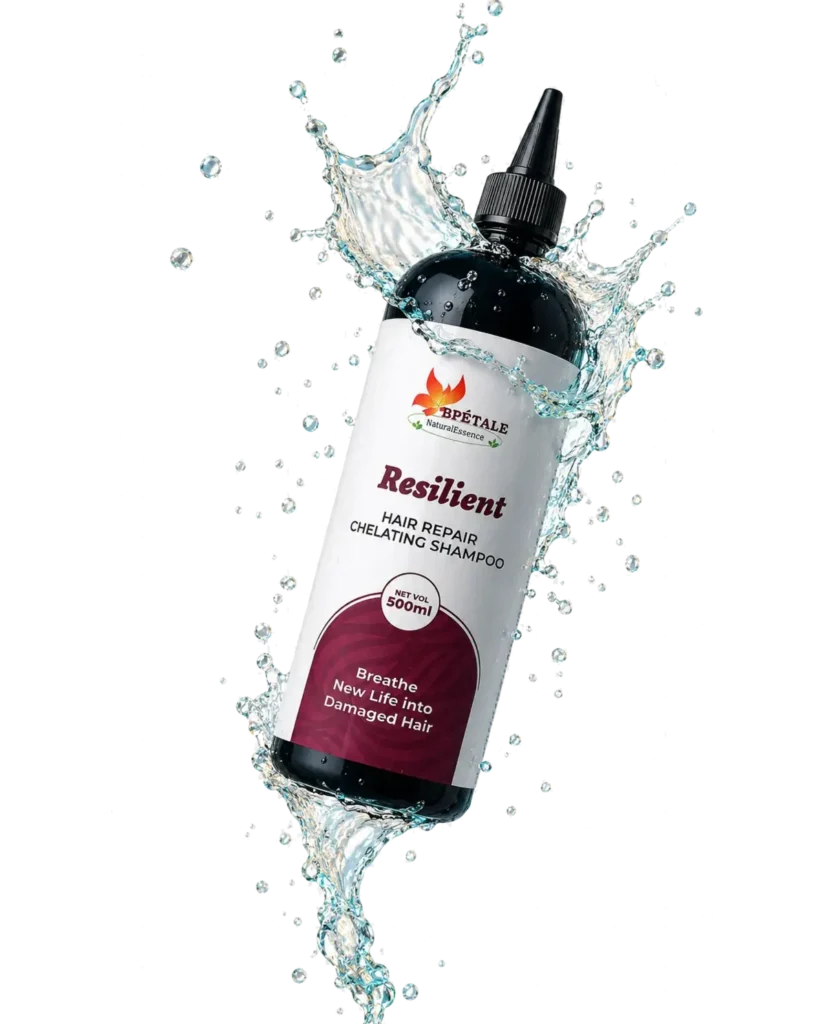
Existing Natural Essence shampoo artwork. Confirm current packaging and directions; the water effect is part of the promotional composition.
Read what the shampoo is intended to do
Start with the approved product description and directions rather than assuming every shampoo has the same intended use. A product described for a particular cleansing task may have different instructions from another product in the range.
Check whether the page explains how the product should be applied and rinsed, and whether any specific cautions are provided. If the intended frequency is unclear, ask the brand. This article does not prescribe a washing schedule or recommend using a stronger formula more often.
For example, the Bpetale catalogue includes a Resilient Hair Repair Chelating Shampoo. That name is a reason to read its specific directions, not a reason to assume it should replace every other shampoo in every person’s routine. Confirm the current approved information for the exact size/formula you choose.
Distinguish rinse-out and leave-in products
A product’s name and directions should tell you whether it is intended to be rinsed away or left in the hair. Do not treat those instructions as interchangeable. If two products are being promoted as a pair, ask what role each plays and how the maker intends them to be used together.
Look for a plain-language description of the texture and application method. A product can be described attractively without telling you how to fit it into your routine. Clear directions are more valuable than a long list of broad promises.
If you want fewer steps, say so when asking for help. A useful recommendation should respect your preferences and time rather than assume the most complete basket is automatically the best one. More products also mean more instructions and more opportunities for confusion.
Treat styling and finishing products as their own choices
Styling creams, butters, oils and serums can be marketed together, but their names alone do not establish the same purpose. Read the intended use of the individual product. Ask whether it is meant for styling, finishing or another specific task.
Avoid turning promotional language into a treatment expectation. A product name containing growth or repair is not enough evidence to promise a clinical result. If a concern involves hair loss or a scalp condition, seek appropriately qualified advice rather than relying on a general catalogue description.
The useful shopping question is whether the product has a clear, suitable place in your existing routine. If you cannot identify that place, pause and ask. You can always choose to keep the list simple until the missing information is available.

Existing Bpetale promotional composition. Ingredient-themed artwork is not a substitute for the product’s complete approved ingredient list.
Compare size and practical use
Check the selected size before comparing prices. A large container and a small one can look similar in a cropped card image. Make sure the variation selected on the product page corresponds to the amount you intend to buy.
Think about where you will keep and use the product. A larger bottle may suit a familiar routine at home; a smaller option may be easier to store or carry when one is actually available. Do not assume the range has a travel size just because a product image looks compact.
Compare the information as well as the price. A clearly described product with readable directions is easier to use as intended than one chosen only for a dramatic image. If a page uses a placeholder photograph, request an accurate packaging image before relying on details shown elsewhere.
Build a basket you understand
For each item, be able to complete this sentence: I am buying this product for this purpose, and I know where to find its directions. If you cannot, the next step is a question rather than another product.
Check ingredients, instructions and any warnings for each selected item. Keep original packaging so the information remains available after the first use. Follow the maker’s storage directions and do not assume a date or shelf life from a different product in the range.
If you are changing more than one part of your routine, keep a simple record of what you selected and why. This is a shopping/organisation aid, not a medical tracking system. It can help you ask clearer follow-up questions if something about the products is confusing.
Questions worth asking before purchase
- Is the product rinse-out, leave-in or intended for styling?
- What is its approved purpose?
- Which directions and cautions apply?
- Does it duplicate something I already plan to keep?
- Is the full ingredient list available?
- Which size am I selecting, and is that size in stock?
- Is the photograph an accurate current package?
Do I need every product in a haircare range?
No general shopping rule requires that. Choose around a clear purpose and the instructions for the actual products. Ask for an explanation when a suggested bundle contains steps you do not understand.
Can a shopping guide tell me how to treat hair loss?
No. That requires an appropriate assessment, not a guess based on a product name. This guide helps you understand a catalogue and make better product-information requests.
Explore Bpetale Natural Essence and the haircare products that match your shopping brief. A useful routine begins with clear information and choices you can explain, not the largest possible collection.