

Krunchies6 min read
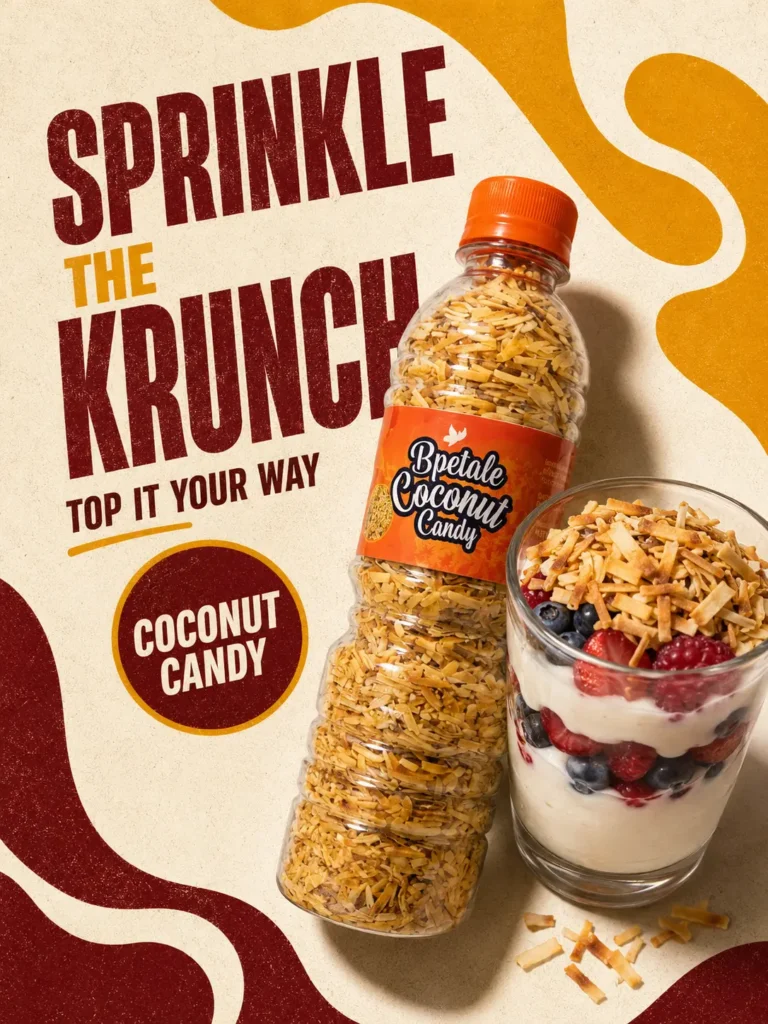
Coconut candy serving ideas do not need to begin with a complicated recipe. A small finishing touch can change the texture and presentation of a dessert you already enjoy. Bpetale’s Coconut Candy is described as thin toasted coconut cuts, making it a natural subject for serving inspiration around parfaits, ice cream and other familiar treats.
The ideas below are flexible suggestions, not tested baking formulas or nutritional claims. Start with foods you already know you enjoy, use the product according to its label and let people choose how much topping they want. A simple presentation often works better than adding every sweet ingredient available.
1. Finish a yoghurt parfait
Layer your chosen yoghurt and prepared fruit in a clear glass or bowl. Keep the coconut candy as the finishing layer so its texture is part of the first bite. A transparent glass makes the contrast between the layers easy to see without requiring elaborate decoration.
If you are serving several people, prepare the base portions and let each person add their preferred amount of topping. This also gives guests a chance to check ingredient information before adding anything. Keep the original packaging available rather than placing an anonymous topping jar on the table.
Choose a few ingredients with a clear role: a base, fruit and the topping. That is enough for a useful serving idea. You do not need to turn a simple parfait into a claim about health or a complicated breakfast routine.

Existing Krunchies promotional artwork showing a suggested parfait use. Confirm current packaging before publication.
2. Add a finishing touch to ice cream
Serve the ice cream first, then offer coconut candy in a separate small bowl or spoon a little over the top. The contrast is the point; a modest amount can give the dessert a different finish without hiding the ice cream beneath it.
For a small gathering, keep the toppings station simple. One coconut option, one other clearly labelled topping and a sauce, if wanted, can give people a choice without making the table crowded. Use separate serving utensils so the toppings remain identifiable.
If other guests bring toppings, keep labels or ingredient information with them. A dessert table becomes much easier to navigate when people can tell what each bowl contains. Appearance alone is not a reliable way to identify ingredients.
3. Give a fruit bowl a different texture
Prepare the fruit you intend to serve and add coconut candy as a topping rather than mixing a large amount through the whole bowl in advance. This keeps the serving flexible and makes it easier for someone to choose the fruit without the candy.
Use a bowl or plate that leaves the fruit visible. The topping should complement the presentation, not cover it completely. If you want a more generous dessert, serve the fruit with a familiar base such as yoghurt or ice cream and let the coconut be the final detail.
Avoid describing the finished dish as sugar-free, suitable for a medical diet or automatically healthier because it contains fruit or coconut. Those claims need information this serving idea does not establish. It is a treat to choose and enjoy on its actual ingredients.
4. Dress a cake slice or simple loaf
Place coconut candy over a cake slice after serving, or use it as a light finishing detail on an iced cake when appropriate for your chosen recipe. A neat border or small central garnish can look considered without needing a large quantity.
Think about when the dessert will be served and the texture you want. A topping sitting on a moist surface will not necessarily behave the same way as a dry topping served at the last moment. Test a small portion if appearance and texture are important for an event.
If you want to bake the candy into a recipe, treat that as a separate kitchen test rather than assuming the topping will remain unchanged in the oven. This article does not claim a tested cake or biscuit formula. Using a known recipe and recording your trial is a better route to a dependable result.
5. Offer a small sharing bowl
Sometimes the clearest idea is the simplest: serve the candy on its own in a small bowl, with the product packaging nearby. It gives people a chance to try the product without needing a complete dessert around it.
For a mixed snack table, give each item a separate space and serving utensil. Keep the names clear, particularly when candied peanuts or other allergen-containing foods are also present. Do not describe a bowl as allergen-free just because an ingredient is not visible.
If you are unsure about a guest’s requirements, ask rather than guessing. Clear packaging and a straightforward explanation are more useful than a broad assurance that every item is suitable for everyone.

Existing Krunchies imagery. This is serving inspiration, not a declared portion size or nutrition statement.
6. Make a small dessert bar feel personal
Choose a familiar dessert base and offer a few carefully selected finishing options. Label the coconut candy, provide a clean utensil and keep the product information accessible. A handwritten place card can make the setup feel intentional without much extra work.
You can build the colours of the table around the serving bowls, napkins or a small arrangement rather than adding more food. That keeps the focus on the products and the occasion. A tidy setup with clear choices is often more inviting than a crowded collection of unlabelled jars.
If you include both coconut candy and candied peanuts, keep them in separate bowls and avoid shared utensils. The FDA’s general food-allergy guidance emphasises checking ingredients and avoiding unwanted allergen exposure; the actual Krunchies label and production information should guide any specific statement about the products.
7. Include it in a thoughtful gift
A sealed bottle of coconut candy can form part of a small gift built around a clear theme: a dessert night, a host thank-you or a selection of familiar treats. Add a note explaining why you chose it or a simple serving suggestion.
Keep the original packaging, ingredient information and date/storage details visible. Do not decant food into a decorative container that loses important product information simply to make the gift look more coordinated.
If you are combining food with non-food items, protect each separately and avoid strong scents or loose products coming into contact with the food packaging. Check the recipient’s preferences and any known dietary restrictions before choosing the contents.
Keep the product information with the ideas
Follow the maker’s storage instructions and the date information on the product. This article does not assign a shelf life to an opened bottle or a prepared dessert. If the information is unclear, ask Bpetale rather than relying on a generic online estimate.
Is coconut candy only for eating on its own?
It can also be offered as a topping, as the serving ideas here show. The best choice depends on the dessert and the texture you want. Start with a small amount and a familiar base.
Are these tested recipes?
They are serving suggestions. Any baking recipe or event preparation that depends on a precise result should be tested separately with the actual ingredients and method.
See the current Bpetale Coconut Candy product page for availability and product details, or explore Krunchies for more ways to enjoy the range.